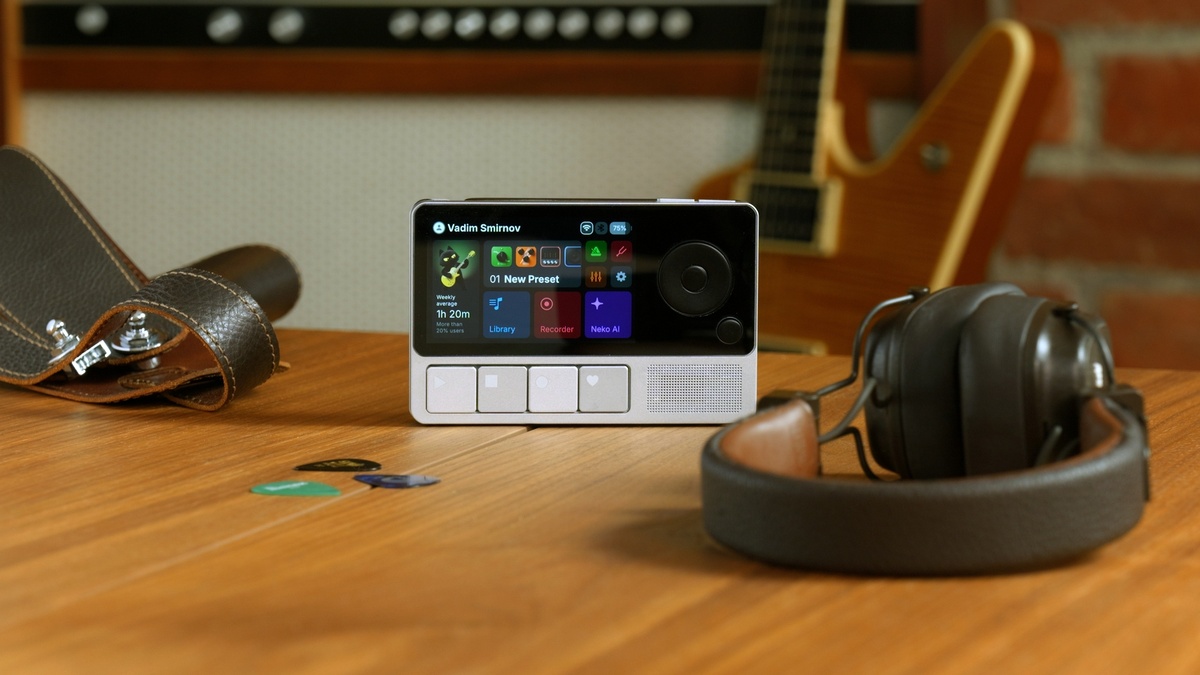
Moises and SoundCloud announced a partnership on October 21, 2026 that connects the two platforms: artists can bring their own eligible SoundCloud tracks into Moises, work on them with stem separation, chord and lyric detection, mixing, mastering and a production assistant called Moi, then publish finished tracks back to SoundCloud. The press release frames it as creation, collaboration and distribution in one loop, with subscriber trials running both ways between Moises Pro and SoundCloud Artist Pro. If you use a stem splitter as the first step of getting a part out of a recording, this is worth a paragraph of your attention and not much more.
Why it matters if you want a score out of a recording
The interesting part is not the publishing button. It is that a large platform is normalizing the idea that a track is not a finished object but a set of separable parts. That is the same assumption behind every useful transcription workflow: you take a mix, pull it apart, and work on one voice at a time.
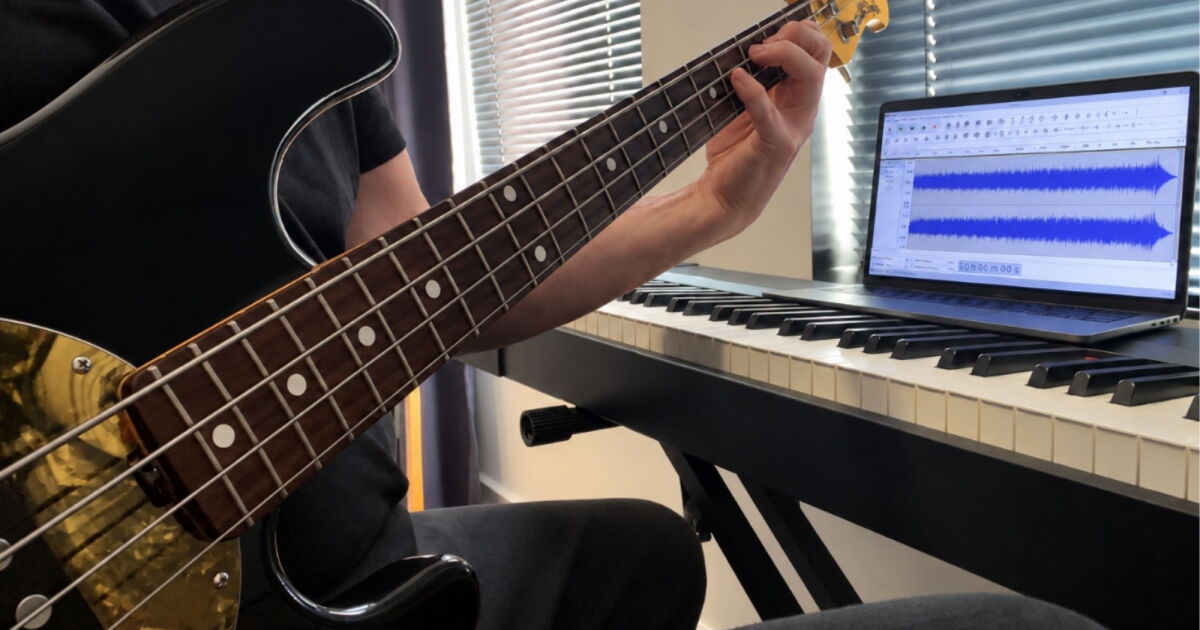
For a drummer learning a part, a bassist working out a line, or a teacher preparing an arrangement, the order of operations has been the same for years. Get the audio. Separate it if the mix is dense. Transcribe the isolated part. Edit the result by hand. The Moises and SoundCloud integration makes the first two steps shorter for people who already host their music on SoundCloud. It does not touch the third and fourth steps, and those are where the work actually lives.
What the release describes is stem separation, chord detection, lyric detection, mixing and mastering, real-time collaboration and an assistant that sets up sessions. Read that list carefully. There is no notation export in it. No MusicXML, no PDF score, no MIDI transcription of a performance. Chord detection gives you chord symbols, which is useful for a rhythm section chart, but it is not a transcription of what the drummer played or how the pianist voiced the comp.
What it changes in practice
Three things, honestly.
Fewer file shuffles. If your reference track lives on SoundCloud and you own it, you can pull it into Moises without downloading, converting and re-uploading. Small win, real one.
Stems as a normal starting point. The integration puts separation in front of a very large audience that may never have thought about it. That is good for everyone downstream, including us. A producer who has separated a mix once is a producer who will separate it again before transcribing.
Collaboration on the same session. Real-time collaboration on a track in a browser studio is genuinely useful for a band splitting arrangement work, and it is the kind of thing that used to require everyone in the same room or a shared DAW project.
What it does not change:
- It does not give you notation. If you need a score, you still need a transcription step that outputs PDF, MusicXML or MIDI, and you still need to open that file in MuseScore, Sibelius, Dorico or Finale and fix it.
- It does not make a busy mix easy. Separation helps, but a wall of distorted guitars or a heavily compressed drum bus is still hard for any model, ours included.
- It does not settle rights. More on that below.
Our view
The trade-off is the one that runs through every platform deal like this. Convenience pulls you into one ecosystem, and ecosystems are sticky. If your stems, your sessions and your releases all live behind one login, leaving gets expensive. That is a business question, not a musical one, and you should price it in before you move a catalog.
The open question is what "eligible tracks" means in practice. The release says artists can import their own eligible tracks. It does not spell out the criteria. Ask before you plan a project around it: which tracks qualify, what happens to a track you later delete from SoundCloud, and whether the imported audio is stored or streamed. Those answers decide whether this is a convenience or a dependency.
The second open question is the one we care about most. Moises says its models are trained on licensed and authorized music, not on user uploads, and that its tools support rather than generate. Good. But a stem splitter and a transcriber are different tools with different failure modes. A separator that leaves a ghost of the snare in the vocal stem will fool a transcription model into writing notes that were never sung. If you are going from a separated stem to a score, listen to the stem on its own first. If it sounds wrong, the notation will be wrong in the same places.
Who should care: producers and remixers who already work on SoundCloud and want a faster path from upload to stems. Worship and session players preparing parts from their own reference recordings. Teachers building arrangements from material they have the rights to use.
Who should not: anyone who thinks this replaces a transcription tool. It does not, and the release does not claim it does. If you need a score, use a tool built for scores. Our stem splitter and our audio to MIDI converter sit on the same pipeline for exactly this reason: separate, then transcribe, then edit.
What to do next
If you want a part out of a recording you own, the workflow has not changed:
- Separate the mix into vocals, drums, bass and the rest. Start with our stem splitter if you are not already inside another tool.
- Transcribe the isolated part. Drums, piano, bass and guitar each have their own model on our side, so pick the right one rather than running everything through a general pass. Transcribe a song.
- Export as MusicXML or MIDI and open it in your notation software or DAW. Expect to fix rhythms, ties and enharmonic spellings. That is normal, not a failure.
- If you only need a MIDI performance to edit in a DAW, skip the notation step and use the audio to MIDI converter.
Two practical notes on rights, because this story will tempt people. A transcription of a copyrighted song is a derivative work. Importing your own upload into a tool does not give you the right to distribute, sell or perform an arrangement of someone else's composition, and the rules differ by country. If you are publishing anything derived from a track you did not write, talk to the rights holder or your local licensing body first. We are not the people to ask for legal advice, and neither is a press release.
If you are evaluating plans on either side, look at the shape of the offer rather than the trial length. Our pricing page describes what each tier includes without quoting numbers, because numbers move. The same discipline applies to Moises and SoundCloud: check the current feature list and export options before you commit a project.
One last thing. The release leans on the phrase "agentic production assistant" for Moi. Treat that as a description of a workflow helper, not a guarantee of musical judgment. An assistant that sets up a session and applies a mix chain is doing what a template does. Whether it teaches you anything depends on whether you can see and change what it did. Ask that question of any tool that claims to teach.
If you want to see what other people have transcribed and shared, browse Explore. If you are building something that needs notation programmatically, the transcription API is the door.